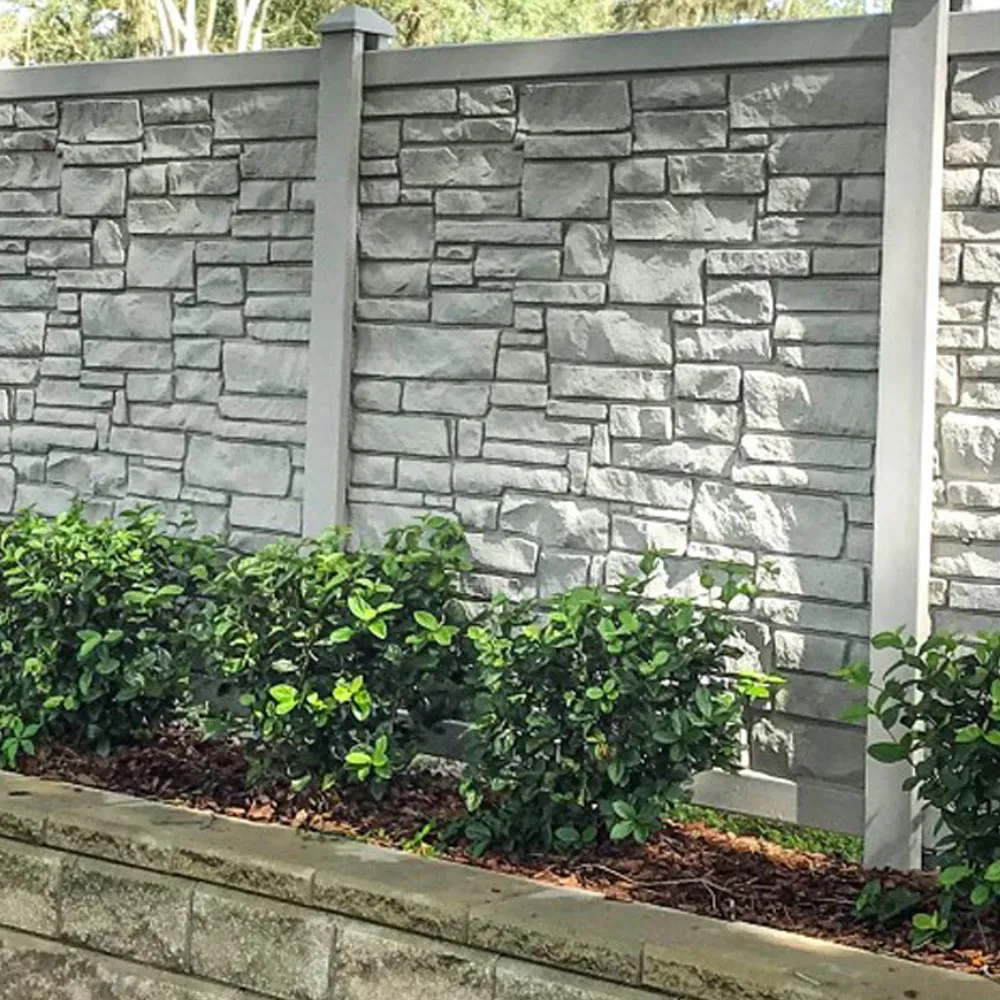
A slope does not rule out a fence. The panels are either racked, meaning they tilt to match the grade, or stepped, meaning each one sits level and lower than the last. For the tightest fit at ground level, racked is the method to ask for.
Three ways to handle a grade
| Method | How it works | Where it fits |
|---|---|---|
| Racked | Rails run parallel to the ground, pickets stay plumb | Mild and medium grades, yards with pets |
| Stepped | Level panels descend like a staircase, leaving a wedge of open space below | Sharp grades, rigid factory panels |
| Built in place | Each board is trimmed to the ground | Wood fences where a neat bottom line matters |
The yard drops off and I have a dog that digs. How are gaps closed?
- Choose racked panels or a fence built in place, not stepped.
- Add a treated kick board at the base.
- Have the pickets scribed to the grade.
- For a determined digger, bury a strip of wire mesh under the fence.
The lot is steep and full of rock, and other companies turned the job down. Is it buildable?
In most cases, yes, though it is slower work. Greater Boston has plenty of ledge and buried boulders. A post that meets rock has two options: core a hole into the stone, or pin the post to it. Both add labor and cost compared with ordinary soil, which is why some installers pass. The site visit is where the fence line gets walked and the hard spots get counted.
Are post holes dug by hand or with a machine?
Either, depending on the spot. Open ground with room to work suits a power auger. A shovel and digging bar take over beside a foundation, close to utility marks, among tree roots and in narrow side yards.
Want a price for your own yard? The estimate is free, done on site, and the quote comes in writing. Call (508) 690-4738.